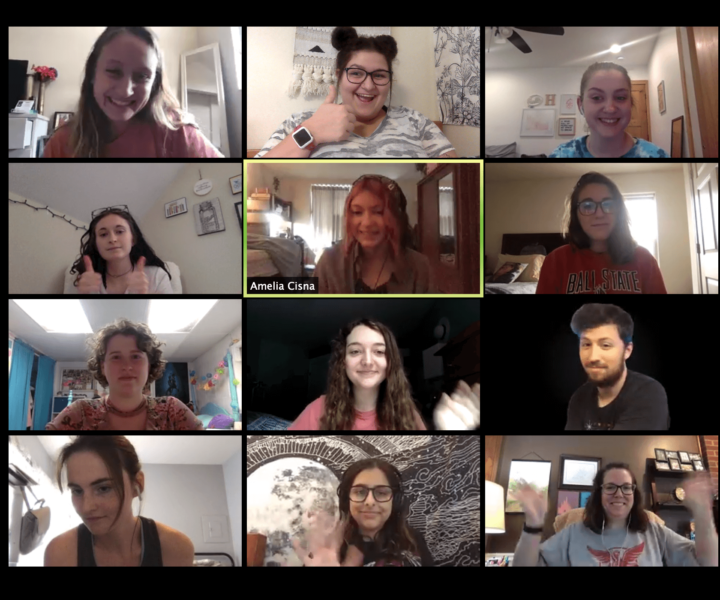
For Laura Latham, the senior Design Team Master, creativity isn’t just a means of expression, it’s her job, and sometimes you have to force it. Sometimes, it feels like digging through concrete.
Creativity often begins with curiosity. It starts with small questions:
Why does this work?
What if we tried something different?
How could this message connect more clearly?
In the Digital Corps, curiosity drives experimentation. It shows up when you test a new editing style, rethink a layout, or dig deeper into a client’s goals. The best ideas rarely begin fully formed, and they usually take collaboration to take them from good to great.

For Laura, that wondering doesn’t stay in her head for long. “I really try to write down any and all ideas whether it’s a sketch or a word or a feeling,” she says. “I like to look at old projects if they relate to whatever I’m working on.” Creativity, for her, is about collecting pieces, even if they’re unfinished ones.
Still, inspiration isn’t always natural. Sometimes it has to be created.
“Sometimes I really just have to force myself to do something to warm up my brain so that I can at least make some sort of progress. Usually that works to jumpstart the process for me,” says Laura.
Even small action is enough to get momentum going.
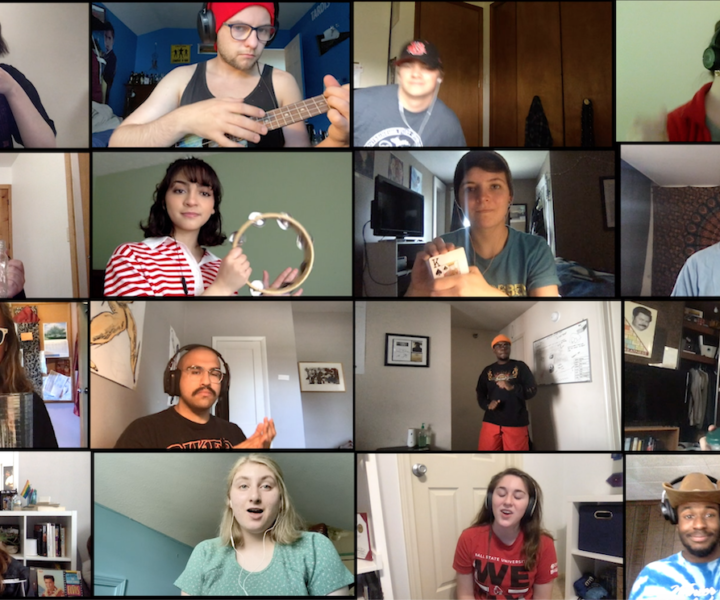
Another powerful source of creativity is collaboration. Within the Corps, different majors, backgrounds, and interests allow for diverse perspectives. Creativity is often less about a lightning bolt of inspiration and more about collective momentum, one idea building on another.
But when she’s feeling stuck, Laura has learned that small shifts make a difference. This year, that shift has been yoga.
“I started yoga this year. It makes me concentrate on everything happening internally. I can completely clear my mind and focus on my breath and my movements,” she says. “I’ve noticed that on the days I do yoga my mind really starts turning out designs and ideas.”
What Laura is experiencing isn’t just personal. Studies from Stanford University have found that walking and other forms of physical movement can boost creative thinking and help overcome creative blocks, even when the movement itself isn’t directly related to the creative task.
The further she gets into her designs, the more she realizes creativity isn’t just mental. “I’ve had to get out of my head and get into my physical body the further I get into my designs.” Clearing her mind physically helps her think more clearly, creatively.
Other times, finding creativity means looking outward. “When I feel stuck, I try to look outside of myself for inspiration.” Sometimes that means doing creative things like coloring, where you only have to make small decisions. Looking at nature or architecture gets her really inspired. She likes to look at things in a completely different field than whatever she’s working on. And sometimes, for her, it means doing non-creative things, reading or just having conversations.
For Laura, creativity doesn’t always look dramatic or groundbreaking. Sometimes it’s a smarter headline, a cleaner design, or a more engaging hook. It’s a thoughtful revision. It’s problem-solving and persistence.
And sometimes, it’s simply deciding to start even when it feels like removing one concrete block at a time.